Happy and Sad House

One page to go with the 10 videos of this house. The video shows the example; you provide the practice. Children aged 3 to 5 learn much more from a video about feelings when a grown-up talks with them about what they saw.

In one minute

If you only have a minute, start here. The rest is further down.

🏠 This week

When you're happy, say it: "I'm happy!"

💬 A question for today

"What makes you happy?"

🧲 For the fridge

If I see my child is sad, then I say "it looks like you're sad" and I wait; I don't rush the feeling away.

Print the cards →

🎒 This house's tool: I say it with words

▶ House playlist on YouTube

In this house

  • What your child learns: to name happy and sad in themselves and in others, and to say it with words when they're sad.
  • Why now: naming a feeling is the first step to handling it. Children recognize happy and sad first, and in themselves first; then in others.
  • The tool: "I say it with words" (the speech bubble). At the end of the house it goes into Pipo's backpack.
  • The characters: Lumi (a very sociable rabbit), Tula (a careful turtle), Bru (a little bear who feels everything strongly) and Abu Oli (the village's old owl, the trusted grown-up). One appears each week.
1
Week 1

Happy

Wednesday · Story · Happy

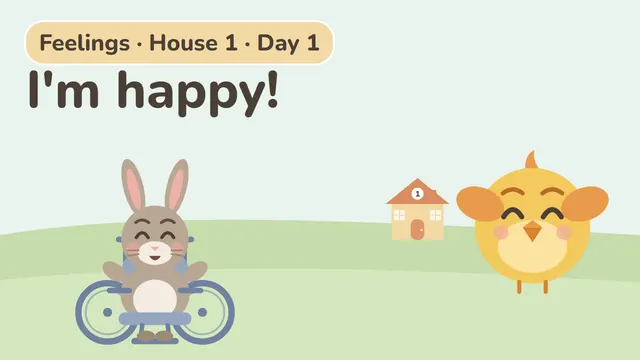
What Does Happy Look Like? Lumi Plays with Pipo

Lumi plays with Pipo; she's happy and says so

💬 To talk about afterwards
  • Ask: "What makes you happy?"
  • Share something of mine: "Playing with you makes me happy"
  • Do something together: Make happy faces together in the mirror
Watch on YouTube ↗
Friday · Play · Happy

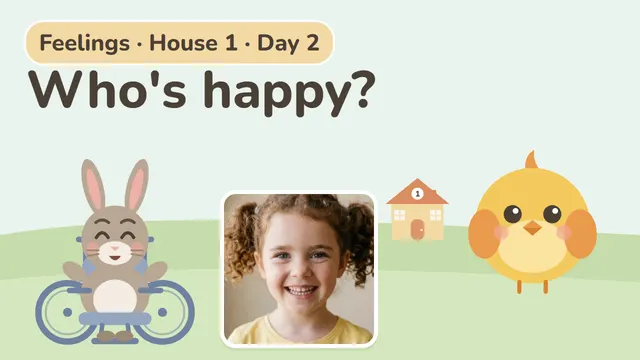
Who Is Happy? A Faces Game with Pipo

Who is happy? Faces of many people

💬 To talk about afterwards
  • Ask: "How did you know they were happy?"
  • Share something of mine: "I look at the smile"
  • Do something together: Look for happy faces in a book
Watch on YouTube ↗
2
Week 2

Sad

Wednesday · Story · Sad

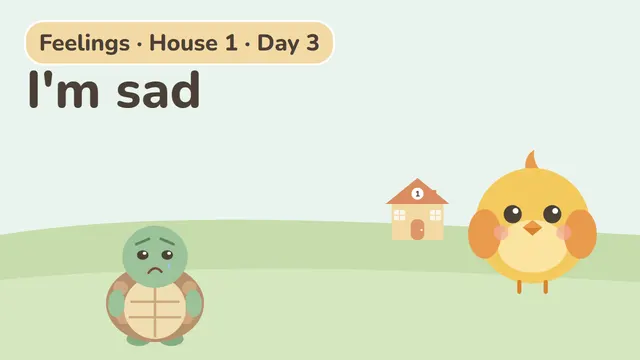
When I'm Sad, I Say It: Tula's Balloon

Tula's balloon flies away; she's sad and says so

💬 To talk about afterwards
  • Ask: "What makes you sad?"
  • Share something of mine: "I feel sad when something I love breaks"
  • Do something together: Play that a toy is sad and says so
Watch on YouTube ↗
Friday · Play · Happy or sad

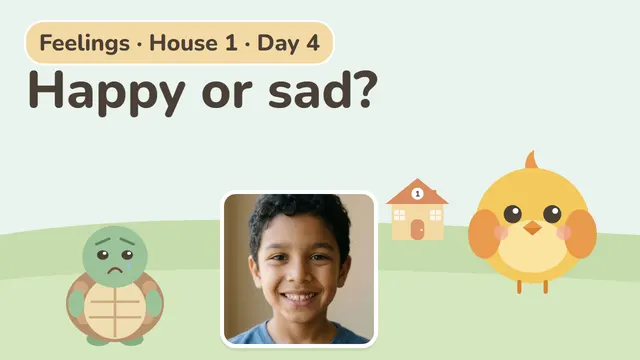
Happy or Sad? A Faces Game with Pipo

Happy or sad on different faces; what happened to Tula?

💬 To talk about afterwards
  • Ask: "Why do you think they're sad?"
  • Share something of mine: "I felt sad when…"
  • Do something together: Take turns making a sad face, then a happy one
Watch on YouTube ↗
3
Week 3

In others

Wednesday · Story · In others

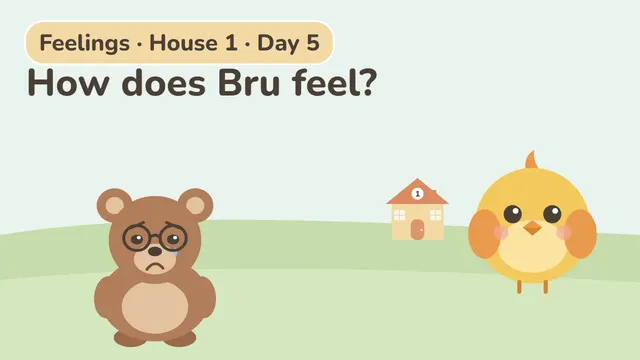
How Do I Know How My Friend Feels? Bru's Cookies

Bru drops his cookie; Lumi notices by looking at his face

💬 To talk about afterwards
  • Ask: "How can you tell if someone is sad?"
  • Share something of mine: "I look at the mouth and the eyebrows"
  • Do something together: Look at someone's face at home: how do they feel?
Watch on YouTube ↗
Friday · Play · Detectives

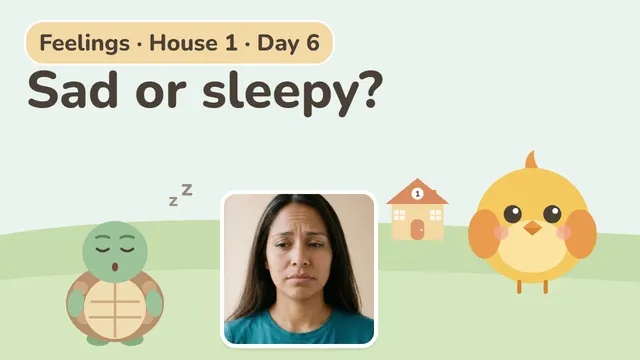
Face Detectives: Sad or Sleepy?

Face and body; sad or sleepy?

💬 To talk about afterwards
  • Ask: "What does someone sleepy look like?"
  • Share something of mine: "When I'm sleepy, I yawn"
  • Do something together: Guessing game: you make a face, your child names it
Watch on YouTube ↗
4
Week 4

Asking for help

Wednesday · Story · Asking for help

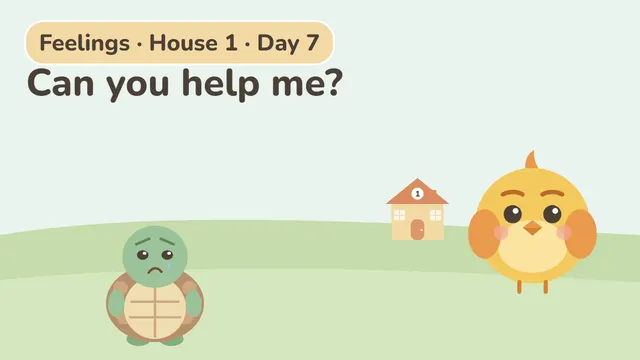
I'm Sad, Can You Help Me? Tula and Abu Oli

Tula loses her toy car, says so and asks for help; Abu Oli asks before hugging

💬 To talk about afterwards
  • Ask: "What helps you when you're sad?"
  • Share something of mine: "A hug helps me"
  • Do something together: Practice: "would you like a hug?" (and it's okay to say no)
Watch on YouTube ↗
Friday · Play · What helps

What Helps When You're Sad? A Game with Pipo

Say it or stay quiet? What helps?

💬 To talk about afterwards
  • Ask: "What would you say to Bru?"
  • Share something of mine: "I'd say: can I help?"
  • Do something together: Draw a list of things that help
Watch on YouTube ↗
5
Week 5

House review

Wednesday · Pipo Made a Mistake!

Pipo Made a Mistake! Happy and Sad Review

Pipo makes four mistakes and your child helps

💬 To talk about afterwards
  • Ask: "What happened to Pipo?"
  • Share something of mine: "I make mistakes sometimes too"
  • Do something together: Fill in the observation sheet this week
Watch on YouTube ↗
Friday · House Mix

House Mix: We Keep "I Say It with Words"

Games from the whole house; the tool goes into the backpack

💬 To talk about afterwards
  • Ask: "What did Pipo put in the backpack?"
  • Share something of mine: "I say it with words too"
  • Do something together: Stick the backpack card on the fridge
Watch on YouTube ↗

Open the observation sheet

In week 5, watch your child in everyday life and mark what they already do. It isn't a test.

Guides →

Guide for grown-ups

How to watch
  1. Watch together, at least the stories (Wednesdays). In the pauses, when Pipo asks "how does she feel?", wait for your child's answer and answer back ("Sad? Yes, look at her mouth"). The video can't hear your child; you can.
  2. Don't correct how they feel. When Pipo asks "how do you feel today?", every answer is okay.
  3. After the video, go play. The real practice happens away from the screen.
How to help in the real moment

When your child is sad (or happy), these five steps help:

  1. Notice what they feel.
  2. See it as a chance to get closer, not a problem to switch off.
  3. Listen and name it: "It looks like you're sad."
  4. Limit the behavior, not the feeling: "You can be sad; you can't hit your sister."
  5. Find what to do together: say it, a hug, some time together.

Fridge card: If I see my child is sad, then I say "it looks like you're sad" and I wait; I don't rush the feeling away.

Use Pipo's words: "I say it with words", "smell the flower, blow out the candle". And name your own feelings too: "I'm a bit sad because my mug broke." Children learn more from what they see.

What not to do
  • Rewards for "being good" or for not crying.
  • "It's not a big deal", "big kids don't cry", "there, there, it's nothing."
  • Making them give kisses or hugs: hugs are asked for, like Abu Oli does.
  • Turning Pipo into a rule ("Pipo says we shouldn't be sad"). Pipo says the opposite: every feeling is okay.
About the faces at the end

At the end of each video there are more realistic faces, to move from drawings to people. If they're AI-generated, the description says so: they are not real people. The next step matters most: look for those same feelings on your family's faces.

When to talk to someone

If your child almost never shows joy, if sadness lasts many days in a row and takes away the wish to play, or if anything worries you, talk to their pediatrician. This guide can't diagnose anything.

The more realistic faces in the videos are AI-generated: they are not real people. Each video says so in its description.